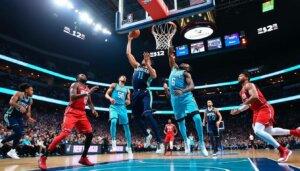
Donovan Mitchell Shines Bright: Recap of His 30-Point Masterclass

On Jan 8, 2026, Donovan Mitchell produced a 30-point masterclass that combined fearless scoring and smart playmaking. The performance highlighted his role as a backcourt star, with a second-half surge that swung momentum and forced defensive adjustments. As a former NBA guard I focus on practical moves, conditioning habits, and reads that helped him dominate the floor.
The game offered clear lessons for players and coaches. Mitchell attacked closeouts, mixed floaters with step-back threes, and finished through contact. Those actions created highlight plays and a reliable scoring template for high-pressure situations.
Beyond individual talent the contest exposed defensive gaps opponents must address. Teams aiming to limit NBA scorers will study film and adapt rotations. For readers seeking specific drills and game plans, the next sections break down scoring sequences, role evolution since his Utah Jazz days, and how this outing fits into postseason outlooks.
Donovan Mitchell 30-Point Masterclass: Game Recap and Scoring Breakdown
The boxscore showed 30 points and several key assists, but the story lies in sequence and timing. Mitchell produced scoring runs when the game tightened, using ball screens and isolation sets to create separation. His ability to read defenders led to high-efficiency attempts near the rim and quality three-point looks.
Film study reveals pick timing and footwork as decisive elements. Defenders hesitated after repeated jab steps, giving Mitchell room for pull-ups. That micro-adjustment lifted team offense during crunch minutes. Final insight, scoring bursts define impact more than raw totals.
Scoring patterns and play types that produced points
Mitchell mixed attack modes with balance between isolation and pick-and-roll. Aggressive drives pressured help defenders, opening kickouts for teammates. The result, efficient scoring and improved spacing across possessions.
Coaches and players should note his use of misdirection before screens and his ball-sync with the big men. Those moments created scoring windows inside the arc and on the perimeter. Key idea, timing beats brute force in halfcourt offense.
How this point game fits Mitchell’s career arc and playoff performance
From his Utah Jazz era to current seasons, Mitchell has evolved into a more complete offensive threat. The performance reinforced his playoff readiness through controlled aggression and late-game poise. Opponents studying his film will adjust coverages, yet his skill set forces matchup problems.
Historical context matters for roster planning and power rankings. Analysts referenced league lists when placing Mitchell among elite guards. For related analysis see the player rankings and the top 25 players feature for comparative perspective. Final thought, peak scoring nights like this shape postseason narratives.
Defensive adjustments opposing teams used
Opponents mixed soft traps and hard hedges to slow penetration. Mitchell countered with sharp passes and resets, keeping possessions alive. Those sequences reduced turnovers and maintained offensive flow.
Teams with strong interior defenders forced him to settle for perimeter shots. When help collapsed, Mitchell punished kickouts with quick reads. Insight, offensive balance overwhelmed defensive schemes in the closing stretch.
Practical training tips inspired by the masterclass
Players seeking to improve scoring should focus on repeatable mechanics and situational reps. Mitchell’s moves rely on rhythm, footwork, and high-rate decision making under fatigue. Training must reflect game speed and contact finishes.
- Sprint-to-shoot reps for pull-up threes after changes of direction
- Contact finishing drills using pads to simulate paint collisions
- Pick-and-roll timing with live bigs to practice read and release
- Closeout counters emphasizing jab-step to create separation
- Conditioning sets that mimic fourth-quarter intensity
Each drill builds the muscle memory Mitchell used on the court. Apply progressive overload and game-speed constraints to translate workouts into performance. Closing thought, targeted practice yields consistent scoring outcomes.
Team ripple effects from a 30-point night
High-scoring outings shift opponent focus and open lanes for teammates. The bench benefits from easier looks, with fewer help rotations clogging the paint. The Cavaliers and coaching staff adjust rotations to exploit these openings.
Media narratives respond to breakout games with headline plays and deeper storylines. For coverage and broadcast scheduling see the broadcast schedule and special event pages like the Christmas Day lineup. Key insight, individual nights create collective advantages.
Contextual links and evolving storylines around Donovan Mitchell
Recent reporting covered off-court headlines and follow-up games that shaped public perception. For background reading consult pieces on career moments and controversy. Media outlets tracked his larger season arcs after standout nights.
Example reading includes in-depth stories about major performances and team wins. Explore the game-winning narratives through articles such as the Cavs victory breakdown and reaction pieces. See coverage of decisive wins in articles like Donovan Mitchell leads Cavaliers to victory over Celtics and post-explosion reactions in Magic responded collectively to Donovan Mitchell's explosion. Final takeaway, single games often trigger extended narratives across media.
Key takeaways for players and coaches
Donovan Mitchell delivered a textbook point game by blending Scoring variety with leadership. The performance underscored traits essential for playoff performance and long-term impact.
Use these lessons to shape practice plans, scouting reports, and rotation strategies. Final sentence, emulate the process, not the highlight reel.