Tarmak vs molten: which basketball is better for U15 players with small hands in 2025?
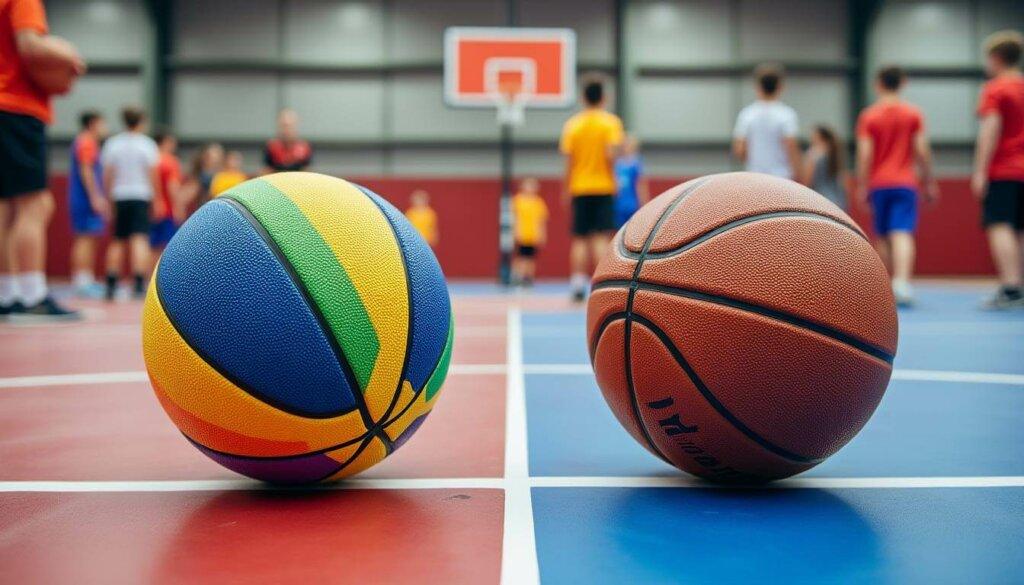
Choosing between Tarmak and Molten for a U15 player with small hands is more than brand loyalty—it's about fit, control, and confidence on the court. Based on how the ball feels in a young player's palm, how the cover grips sweaty fingers, and what helps develop shooting and handling mechanics, one option will clearly speed up progress. I'll argue, using practical drills and model-by-model comparisons, which ball gives a real edge to smaller-handed teens in 2025.
Tarmak vs Molten for U15 players with small hands: grip, feel and immediate control
Small hands demand a ball that feels smaller than it measures. That’s why the surface texture, panel design, and inflation standard matter more than the badge. Molten uses a distinct multi-panel layout that many players report offers more consistent fingertip contact, while Tarmak focuses on affordability and an aggressive texture to lock the ball.
- Grip: Molten tends to have finer pebbling and softer composites on higher-end models (better for feel); Tarmak often gives a rougher, tackier grip that helps in quick catching.
- Control: Consistent bounce and seam placement on Molten balls support repeatable dribble and shot mechanics.
- Affordability: Tarmak offers more budget-friendly options that still outperform basic rubber balls from other brands like Baden or Mikasa.
Example: Marcus, a hypothetical 14-year-old point guard with a 7.0" hand span, switched from a worn Spalding junior ball to a Molten GG7X replica and noticed tighter release and better arc within two weeks of focused practice.
Why fingertip placement and panel design matter for small hands
When a player can’t wrap fingers fully around the ball, fingertip control becomes the primary driver of shot consistency. Molten’s multi-panel surface redistributes seams so that fingertips find predictable edges, aiding release. Tarmak designs often leave more pronounced pebbles that can help a beginner secure the ball during aggressive drives.
- Molten’s twelve-panel design -> more consistent fingertip positioning.
- Tarmak’s textured cover -> immediate tack for catching and quick passes.
- Other brands (Wilson, Nike, Adidas, Rawlings) offer alternatives but with differing trade-offs in price vs. feel.
Key insight: For U15 players with small hands, panel layout and pebbling beat brand prestige when it comes to immediate handling gains.
Size, weight and the practical choice: which model helps develop skill faster?
Officially, most U15 leagues use a size 6 ball for girls and sometimes for boys depending on local rules; however, many U14–U15 boys still practice with size 7 to build strength. For players with small hands, a size 6 or a well-designed size 7 with superior grip is the true winner.
- Size 6 advantage: Easier to palm, faster release, fewer mechanical compensations.
- Size 7 with better grip: If a size 7 has superior texture (ex: Molten GG7X or BG4500 when broken in), it can approximate the feel of a smaller ball.
- Weight: Stick to regulation weight for muscle memory, but prioritize grip and control over tiny weight differences.
Training with a ball that forces young players to alter wrist mechanics delays skill transfer. So the practical pick is the ball that lets a kid shoot and dribble without compensating.
Tarmak models worth trying for small-handed U15 players
Tarmak BT900 and BT500X occupy different parts of the value ladder. The BT900 is marketed as a FIBA-approved option in some lines and offers surprisingly consistent weight retention. The BT500X is cheaper but has a tacky surface that younger players immediately notice.
- BT900: stable weight, good initial grip, contested against Molten in recent 2024–25 tests.
- BT500X: great for beginners, very tacky, may wear faster outdoors.
- Value perspective: read a detailed comparison at Tarmak vs Molten value.
Practical verdict: Tarmak is the smart starter ball for clubs on a budget and for U15 players who want immediate tack while they develop fundamentals.
Molten models and why they often win the feel argument
Molten GG7X and the BG series (BG3800, BG4500) have been widely used internationally. Molten’s higher-end covers are engineered for consistent feel and less shrinkage over time—important when you want reliable repetition during practice.
- GG7X: premium indoor feel, excellent fingertip feedback.
- BG4500 & BG3800: durable indoor/outdoor options; see the detailed comparison at Molten BG3800 vs BG4500 and BG4500 vs GG7X.
- Durability: Molten usually outlasts cheaper rubber balls and keeps feel longer than many Tarmak outdoor models.
Key insight: For a dedicated U15 player intent on refining touch and release, Molten’s consistent feel outweighs the premium price.
Training tips, drills and shoe pairing for small-handed U15 players using either ball
Getting the right ball is only half the battle. Pairing it with targeted drills and proper footwear accelerates improvement. Small-handed guards need wrist strength, fingertip drills, and shoes with excellent traction to transfer ball feel into reliable game actions.
- Drill: fingertip push shots (use a size 6 and a size 7 for contrast) — 3 sets of 20 reps each to train release.
- Drill: high-rep pocket catches and quick-release layups to build confidence on the move.
- Shoe pairing: test options from Nike, Adidas, Under Armour for lateral support and traction that complements small-hand mechanics.
Defensive drills also strengthen hands and anticipation—read more about how defense complements ball control at The importance of defense in basketball and explore the types of defense at The 4 types of defense and Basketball defense guide.
Concrete weekly routine for Marcus (U15, small hands)
Week plan blends ball skill and strength: three handling sessions + two shooting sessions + one strength day. Use both a Molten and a Tarmak in practice to adapt feel variability.
- Monday: fingertip release drills (10 minutes), pocket catches (10 minutes), 3-point form work (15 minutes).
- Wednesday: weighted finger extensions (resistance bands), dribble ladders, 1-on-1 closeout scenarios.
- Friday: game-speed finishing, defense transition drills (see defense resources above), shoot-around with both balls to adapt feel.
Final training insight: Rotating between a tacky Tarmak and a precise Molten accelerates tactile adaptation and reduces dependency on one ball’s quirks.
Brand context and buying advice: where Molten and Tarmak sit among the field
Beyond Molten and Tarmak, brands like Spalding, Wilson, Nike, Adidas, Under Armour, Baden, Mikasa, and Rawlings populate the market. Each has niche benefits—Spalding/Wilson for American feel, Molten for international uniformity, Tarmak for value.
- Buy Molten if you want a consistent, high-end feel for indoors and tournament play.
- Buy Tarmak if budget, quick grip, and accessibility are priorities for early skill acquisition.
- Consider switching to a size 6 or a softer composite ball for off-season skill work.
For gear context and shoe pairings, see the Nike GT Cut review at Nike GT Cut 3 review and follow industry trends on youth equipment to keep your training current.
Practical recommendation: If your U15 player has small hands and you must pick one ball for development, choose Molten for long-term skill precision; choose Tarmak for an immediately forgiving grip and lower price. Rotate both during practice for the best developmental outcome.
Further reading and resources
- Tarmak vs Molten value — deeper cost/benefit analysis.
- Molten BG3800 vs BG4500 — which Molten fits indoor/outdoor needs?
- Molten BG4500 vs GG7X — picking the Molten that suits small hands.
- The importance of defense in basketball — why defensive drills matter for hand strength.
- The 4 types of defense in basketball — defensive context for youth training.
Questions young players and parents often ask
Which ball should my U15 player use for practice if they have small hands?
Start with a size 6 when possible. If league rules require size 7, pick a Molten BG or GG model with softer composite or a tackier Tarmak to avoid mechanical compensation. Rotating both helps hand strength and adaptability.
Is it worth spending extra on a Molten GG7X?
Yes, if the goal is precision and consistent indoor performance. Molten’s higher-end balls retain feel and weight better over time, which matters for repeatable shooting mechanics.
Can drills make up for using a cheaper ball?
Partially. Drills build wrist strength and fingertip control, but the right ball accelerates correct motor patterns. Use a cheaper Tarmak early, but add a Molten for skills work to refine touch.
How do shoes affect small-hand players?
Shoes from Nike, Adidas, or Under Armour influence stability and traction. Stable footing improves release mechanics; pair your ball choice with supportive footwear to get the most from each rep.
Where can I read more about matching ball choice to defensive and offensive drills?
Start with the defense and training resources linked above like Basketball defense guide and the general defense importance page to see how ball handling integrates with team defense and individual development.