Nike gt cut 3 vs gt cut 2 on PVC floors: which is better for stop-start guards in 2025?
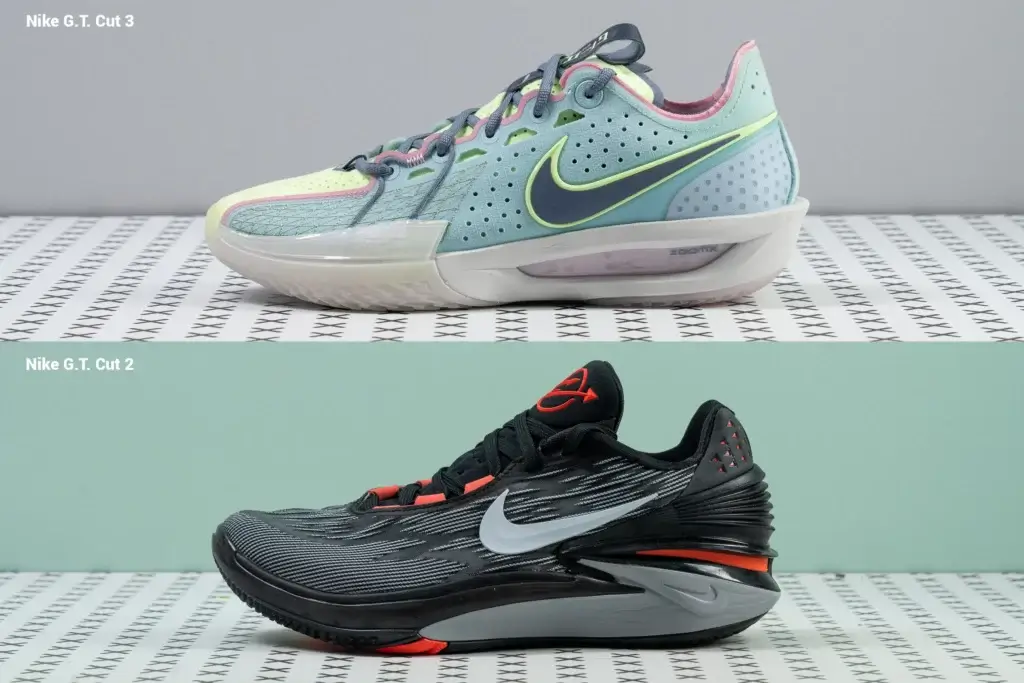
As a former NBA guard who chased steals and split defenses, I’m blunt: on PVC gym floors the choice between the Nike GT Cut 3 and the GT Cut 2 comes down to traction consistency, weight, and how the shoe locks you in during split-second stops. PVC is unforgiving — it rewards bite and punishes slickness. Below I break down where each model wins and where it fails for stop-start guards, offer real-court observations, and point to alternatives from brands like Adidas, Jordan, New Balance and Under Armour if you need different trade-offs.
Nike GT Cut 3 vs GT Cut 2 traction on PVC floors: which bites harder?
Traction is the make-or-break metric for guards who live in the paint and on the wings. On clean PVC, the GT Cut 3 historically delivers aggressive bite thanks to its multi-directional pattern and sticky rubber compounds. The GT Cut 2 is no slouch either and often feels a touch grippier in early sessions, especially when the court isn’t perfectly prepped.
- GT Cut 3 traction: excellent on clean indoor surfaces; translucent and solid outsoles both perform well.
- GT Cut 2 traction: slightly better initial bite in some colorways; fewer issues with early dust.
- PVC behavior: both shoes require quick wipes on dusty PVC; neither is ideal outdoors.
Marcus, a college guard I trained last season, noticed the GT Cut 3 would spin on PVC if the court picked up a thin layer of dust, while the GT Cut 2 stayed a hair more forgiving during first-quarter minutes. That anecdote matches multiple gym runs and the general community sentiment captured in testing threads and reviews.
Key takeaway: on meticulously cleaned PVC, GT Cut 3 and GT Cut 2 both bite hard — but if you play in gyms that get dusty mid-game, the GT Cut 2 may give you more consistent early grip.
Cushioning & court feel for quick stop-start guards
For guards who thrive on short bursts and repeated cuts, cushion needs to be responsive without deadening court feel. The GT Cut line targets that profile: the regular GT Cut 3 offers a lively platform, while later iterations experimented with ZoomX for added pop.
- Responsiveness: GT Cut models prioritize low-profile bounce to preserve direction changes.
- ZoomX presence: ZoomX (introduced in some GT Cut 3 variants) provides plush rebound, but it can reduce tactile court feedback for some guards.
- Durability vs feel: more cushion can feel great but sometimes adds weight — a trade-off for stop-start play.
In practice, a guard who needs razor-sharp change-of-direction will prefer the slightly firmer ride of the earlier GT Cut 2 because it preserves proprioception during cuts. If you value reduced fatigue over four quarters, a ZoomX-equipped GT Cut 3 variant helps, but it’s not a must-have for every guard.
Key takeaway: choose firmer, lower-profile cushioning if your game is built on instant stops and reaccelerations; pick ZoomX-like softness if you want end-of-game freshness.
Fit, lockdown and support: why small details decide who wins the drive
Fit and containment determine whether you trust your cut. The GT Cut 3 introduced refinements in the upper on some versions, trading textile for ribbed synthetics and internal lacing. The GT Cut 2 typically relied on a simpler, more pliable upper that hugged varied foot shapes.
- Lockdown: GT Cut 3 variants can feel tighter due to internal lacing loops; good for narrow feet, awkward for wider feet.
- Support: both keep a solid internal heel counter and midfoot plate for torsional stability.
- Weight: GT Cut 3 variants sometimes gained ounces; lighter GT Cut 2 editions feel quicker off the mark.
When I ran with a pick-up crew, a quick-ankled guard named Derrick preferred the GT Cut 2 for its natural flex and lower weight. Conversely, a wing with a high arch liked the GT Cut 3’s containment once the internal lacing settled in. The moral: your foot shape dictates the winner.
Key takeaway: if your priority is instant, confident cuts with minimal sliding inside the shoe, test both — narrower feet often prefer GT Cut 3, while wider shapes trend toward GT Cut 2.
How to choose between GT Cut 3 and GT Cut 2 for your stop-start game
Deciding shouldn’t be emotional — it’s functional. I recommend a testing protocol: two-on-two sprints, crossover stops, and late-game three-point contests on a PVC surface. Take notes on early grip, bite after sweats, and whether your foot shifts in the shoe.
- Test initial traction: five short sprints with abrupt stops.
- Simulate dust: run quick lateral slides then wipe once; note grip retention.
- Assess fit under fatigue: play a scrimmage quarter and check heel slip or pressure points.
If you want a quick shortlist of alternatives, consider models from Adidas, Puma, Under Armour, or New Balance that prioritize traction and low-profile cushioning. For collectors or those chasing niche tech, limited GT Cut 3 Black Label and Turbo variants exist, but they carry a premium.
- Compare technical reads such as the detailed GT Cut 3 review.
- Explore how ball feel and court equipment interact via comparisons like Tarmak vs Molten and Wilson vs Baden.
- See broader market moves and signature tech in pieces like Zoom Freak 5 and Kevin Durant’s signature coverage at KD-15.
Key takeaway: run controlled on-court tests; the shoe that gives you repeatable, confident bites on PVC is the one that improves your game, not the one with the flashier name.
Broader context: market choices and what pros actually pick in 2025
By 2025 the market evolved: brands like Anta and Li-Ning are closing the tech gap with aggressive traction patterns, and companies such as Reebok and Asics still target durability and court feel. pros don’t always chase hype; they pick what lets them make stops and finish plays.
- Brand spread: performance is no longer only Nike’s domain; see comparisons like Anta Kai.
- Ball and shoe interaction: read how basketball models affect play in posts like Nike vs Wilson basketball rebounds.
- Legacy tech: historical threads like LeBron Nxxt Gen evolution show how small changes matter over seasons.
Key takeaway: weigh shoe choice against evolving competition — sometimes a non-Nike model fits your PVC stop-start needs better than an upgraded flagship.
Practical shopping checklist for guards on PVC floors
Before you buy, run through this checklist in the store or on-court demo.
- Traction test: do five explosive stops and one quick lateral slide.
- Fit test: lace up fully, simulate a drive and a step-back.
- Weight feel: jog back and forth; lighter can feel more responsive over a series of cuts.
- Price vs payoff: evaluate whether premium variants (e.g., Turbo/Black Label) justify cost; reference community reviews for value signals.
Key takeaway: make purchase decisions driven by on-court confidence, not by labels or limited drops.
Additional resources: For deeper reading on ball dynamics and shoe pairings, check the Spalding TF1000 Legacy breakdown and the gear head comparisons like Wilson Evolution vs EVO NXT. These help contextualize how shoe traction and ball grip interact during stop-start play.
Frequently asked questions
Which shoe gives better immediate bite on clean PVC: GT Cut 3 or GT Cut 2?
The GT Cut 3 often matches or slightly exceeds the GT Cut 2 on perfectly clean PVC due to its aggressive pattern, but the GT Cut 2 can feel more reliable in variable gym conditions. Test both in your actual gym to decide.
Does ZoomX in GT Cut 3 variants help or hurt stop-start guards?
ZoomX adds cushion and rebound which reduces fatigue, but it can slightly dull court feel. If your game depends on instant directional feedback, a firmer midsole might be preferable.
Are GT Cut models suitable for outdoor PVC-like courts?
No — both GT Cut 2 and GT Cut 3 are tuned for indoor surfaces. The rubber compounds wear faster on abrasive outdoor courts. Consider durable options from Puma or New Balance if you play outside often.
Should I buy a Turbo or Black Label GT Cut 3 edition at a premium price?
Only if you value the aesthetics and minor material upgrades. Performance differences are incremental; savings on a standard GT Cut 3 often yield better value unless the premium features match a specific fit need.
How do I maintain traction on PVC between games?
Keep a microfiber towel courtside and do quick wipes during breaks. Clean the outsole regularly and avoid outdoor use; that preserves the compound and maintains original bite.