NBA Scores Highest Opening-Month TV Ratings in 15 Years, Marking a Major Comeback

As a former NBA player, I felt the electricity from tipoff through the first month. NBA Scores Highest Opening-Month TV Ratings in 15 Years reads like a headline, yet the numbers back the claim. National games on NBC, Peacock, Amazon Prime Video and ESPN drew more than 60 million viewers during the regular season first month. This surge marks a major comeback for basketball viewership, tied to a new 11-year, $76 billion broadcast agreement and a fresh crop of marketable stars.
Attendance stayed strong, nearly matching last season, which remains one of the best on record. Ten teams sold out every home game to this point, while merchandise sales rose over 20% online. League social content topped 30 billion views across platforms, a record early-season figure. Below are the quick wins driving the rebound.
- Massive national exposure via broadcast partners.
- New stars who attract younger audiences.
- Strong in-arena demand keeping the live product vibrant.
NBA Scores Highest Opening-Month TV Ratings: what drove the comeback
Opening-month momentum did not happen by accident. Broadcasters scheduled marquee matchups and leveraged streaming windows to reach different audiences. The result shows in the numbers, with the highest opening-month TV ratings in 15 years.
- Strategic scheduling on NBC and cable networks increased prime time reach.
- Cross-platform promotion pushed fans from social clips to full games.
- Star-led storylines drew casual viewers back to regular season basketball.
I remember facing sold out arenas early in my career. The current energy mirrors that intensity. Key insight, the scheduling and narrative drive viewership growth.
Broadcast partners and viewership growth
Broadcast deals changed the game for reach and revenue. The league entered a major contract with broadcast partners. That new alignment put national games in front of larger audiences on more platforms.
- NBC and Peacock boosted coast to coast exposure. See NBC East Coast national games coverage for schedules and reach: NBC East Coast national games coverage
- Amazon Prime Video and ESPN extended streaming options for younger fans.
- League Pass subscriptions rose, showing appetite for out-of-market access.
Merchandise spikes and social engagement confirm this is more than a temporary bump. Key insight, broadcast strategy amplified a fragile momentum into broad viewership gains.
How social media, stars, and arenas lifted TV ratings
Social clips turned plays into national water cooler moments. The league reported over 30 billion social views, a record for this early season point. Players such as Shai Gilgeous-Alexander, Victor Wembanyama and Luka Doncic helped sell the product.
- Short form clips funneled viewers to full game broadcasts.
- Merch growth rose more than 20% on official stores.
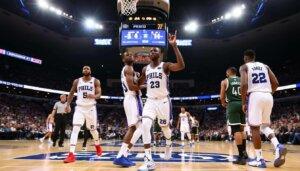
- In-arena energy matched broadcast momentum, with many teams selling out every home game.
From the locker room, players feed storylines. Those storylines turn into appointment viewing. Key insight, social reach and live atmospheres worked together to lift TV numbers.
Attendance, subscriptions, and economic impact on the game
Arena attendance held near last season levels, itself a strong sign. Leaguewide arena capacity approached 97% in early weeks. Ten franchises reported sellouts through those first games, including the Celtics and Knicks.
- Ticket demand kept in-arena revenue healthy.
- League Pass subscriptions rose about 10%, with viewing time up 8%.
- Merchandise sales growth supported team revenue streams.
Local markets influence national figures. Higher attendance preserves game day atmosphere for TV viewers. Key insight, economic signals show sustained fan investment.
Our opinion
The data points to a genuine rebound for professional basketball viewership. Strong broadcast placement, a roster of next generation stars, robust social metrics and steady arena demand form a clear path to sustained growth. Fans returned to screens and arenas with purpose.
- Broadcast alignment created reliable windows for national exposure.
- Player narratives attracted casual fans back to regular season games.
- Commercial gains surfaced across merchandise, subscriptions and ticketing.
As a former player, I urge teams and broadcasters to keep building strong storylines and accessible windows for fans. The current momentum offers a real chance to lock in new viewers and deepen fan loyalty. Final insight, the opening-month surge outlines a blueprint for basketball growth moving forward.
Further reading on broadcast scheduling and fan engagement: